The Message Is Only Half the Story
Why can someone tell us the exact same thing in two different places, and somehow it feels completely different?
- By
- Ella Countryman
Why can someone tell us the exact same thing in two different places, and somehow it feels completely different?
That question is honestly a big part of why I keep coming back to communication in the first place. We can hear something from a friend, read it in a news article, see it in a TikTok, or have it randomly show up while we are scrolling. The information might be almost exactly the same, but somehow our reaction changes depending on where it came from. To me, that is where media starts getting really interesting. The message is never just by itself.
I study Communication Studies and Marketing Communication at Bemidji State University, mostly because I keep finding myself wondering about people and why communication works the way it does. I notice the words people use, but I also notice everything happening around those words. Where did the message come from? Who is saying it? Why did I pay attention to this one but scroll right past another one without even thinking about it?
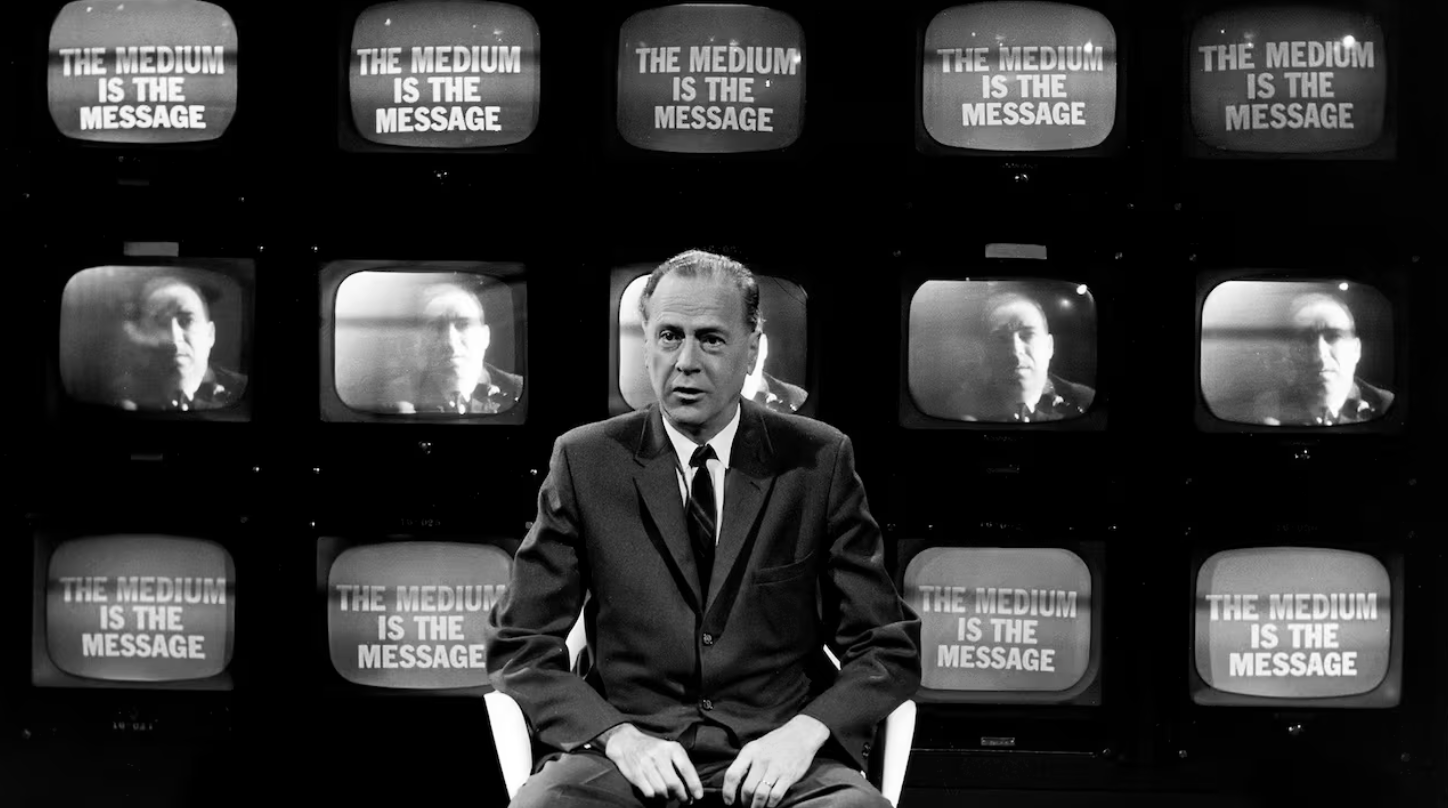
One of my favorite quotes of all time is from communication theorist Marshall McLuhan:
“The medium is the message.”
I actually like this quote so much that it is the background banner on my LinkedIn profile. It sounds almost too simple at first, but I think that is part of why it has stuck with me. Five words somehow explain something I notice constantly.
The way I understand McLuhan is that we cannot completely separate a message from the way we receive it. The platform matters. The environment matters. Even the expectations we already have for that platform matter. We usually focus on what someone is telling us, but the more I think about it, the way they tell us can change the whole experience.
Think about a major news story. You could read a full article about it, watch a news anchor explain it, see a 30-second TikTok summarizing it, or come across a meme about it five minutes later. Technically, all four could be referring to the exact same event. But I do not think we experience them as the same message. A full article asks us to stop and read. TikTok has to compete for our attention almost immediately. A meme might make the event feel funny, ridiculous, or less serious before we have even learned much about what happened.
And then there is everything surrounding the actual content.
On social media, we do not just see a video. We see the likes, comments, shares, view count, username, caption, sound, and whatever the algorithm decides to place above or below it. If I see one video with 400 views and another with four million, I already look at them differently before I even press play. Four million views tells me that something happened there. Other people stopped. Other people watched. Now I want to know why.
That is what gets me about McLuhan's quote. The platform is doing something while it gives us the information. It tells us what is popular. It gives us little signals about what other people are paying attention to. It decides what appears next. And it makes it unbelievably easy to keep going. I can open TikTok because I want to look at one thing and somehow realize 30 minutes later that I am watching a video I never intended to find in the first place.
I definitely catch myself doing versions of this all the time. I will pick up my phone because I need to answer a message, and a few minutes later I am doing something completely unrelated to why I grabbed it. That feels so normal now that it is easy to ignore. But maybe that is exactly why it is worth paying attention to. Once something becomes normal, we stop noticing how much it might be teaching us about what to expect.
Even texting does this in a much smaller way. Think about getting a message that only says, “Okay.” Depending on who sent it and what you were talking about, that one word can feel completely normal or like you somehow ruined their entire day. Change it to “Okay!” and it feels different. Add an emoji and it changes again. The word itself barely changed, but everything around it gave us more information about how we were supposed to read it.
That is also one of the reasons I keep coming back to Marketing Communication. Brands are constantly trying to figure out not only what they should say, but where and how they should say it. Something that works perfectly in a print ad could feel strange on TikTok. An email probably should not sound exactly like an Instagram caption. Even if the audience is technically the same group of people, the expectations change when the platform changes.
I think we sometimes talk about communication like the message exists on its own. Someone creates it, another person receives it, and that is the whole process. But there is so much happening in between those two points. Technology, algorithms, design, timing, culture, popularity, and even our own habits can all shape what gets through to us and what we do with it once it does.
That is what I want this blog to give me a reason to pay closer attention to throughout the semester. I am interested in social media, marketing, technology, algorithms, attention, and the ways our communication habits keep changing without us necessarily noticing the change while it is happening. I especially want to look at the things that have become so normal that we almost forget they were designed at all.
Because maybe the most influential parts of media are not always the ones obviously asking for our attention. Sometimes they are the ones quietly deciding what gets our attention in the first place. And that is probably why I keep coming back to “the medium is the message.” It reminds me that whenever I look at a message, I should probably be looking at what is carrying it too. The more I notice it, the more I realize the message is only half the story.
Written by
Ella Countryman
Media & Society · Bemidji State University · 2026